Montessori Methodology
From 4 months to age 5 — nurturing the child's natural potential through Maria Montessori's purist philosophy
Discover Our Approach3
Programs
100%
Certified Montessori Guides
2
Campuses
29
Years Experience
Faithful to Maria Montessori's Vision
At Golden Valley School, we practice purist Montessori education — faithful to the original philosophy, methodology, and materials developed by Dr. Maria Montessori over a century ago.
We believe that each child carries within an inner guide — a natural drive toward growth, independence, and self-construction. Our role is not to fill the child with knowledge, but to prepare the environment and step back so the child can reveal their true potential.
From 4 months onward, children at GVS enter a carefully prepared Montessori environment where they develop at their own pace, guided by certified Montessori educators who observe, respect, and follow each child's unique developmental rhythm.
"The greatest sign of success for a teacher is to be able to say: the children are now working as if I did not exist."
Key Montessori Concepts
Our practice is grounded in the foundational principles that Dr. Maria Montessori discovered through decades of scientific observation of children.
The Absorbent Mind
From 4 months to age 5, the child possesses an extraordinary capacity to absorb knowledge from the environment effortlessly and unconsciously. This is the most critical period for learning — the mind literally constructs itself through experience. At GVS we honor this by providing rich, purposeful environments from the earliest stages.
Sensitive Periods
Children pass through transient windows of intense sensitivity — for order, language, movement, sensory refinement, and social behavior. When these natural urges are met with the right environment and materials, learning happens with joy and deep concentration. Our guides are trained to recognize and respond to each child's sensitive periods.
The Prepared Environment
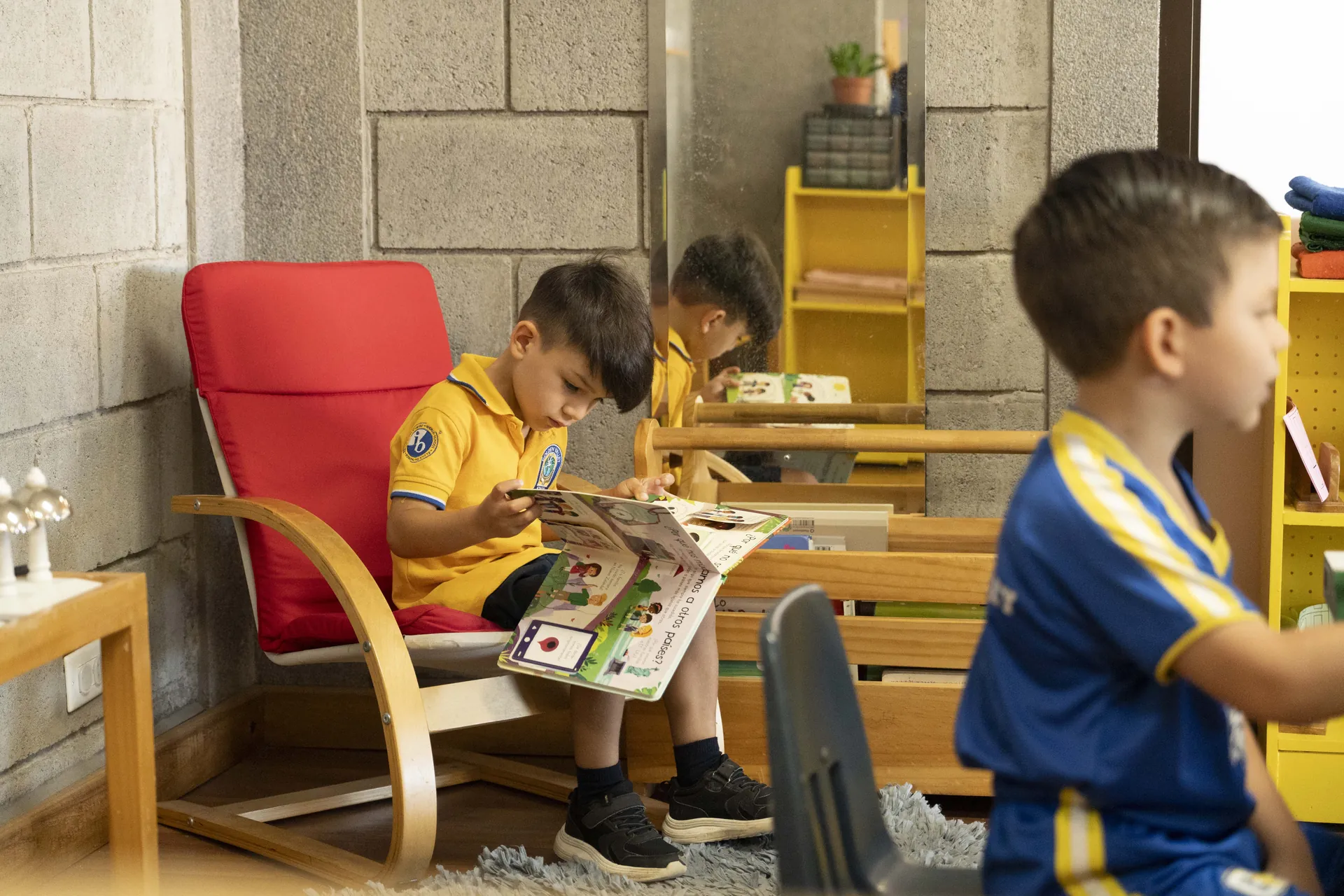
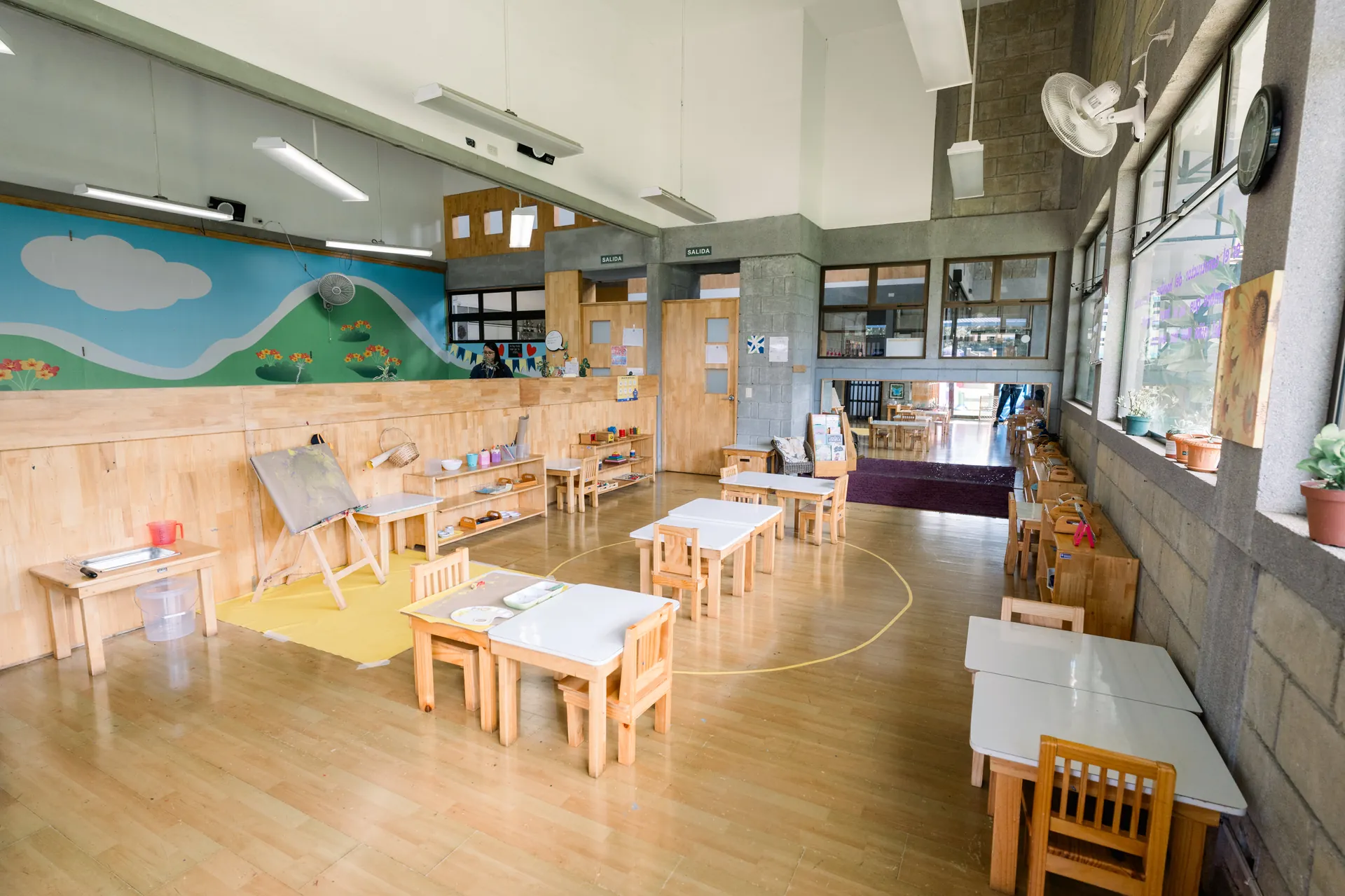
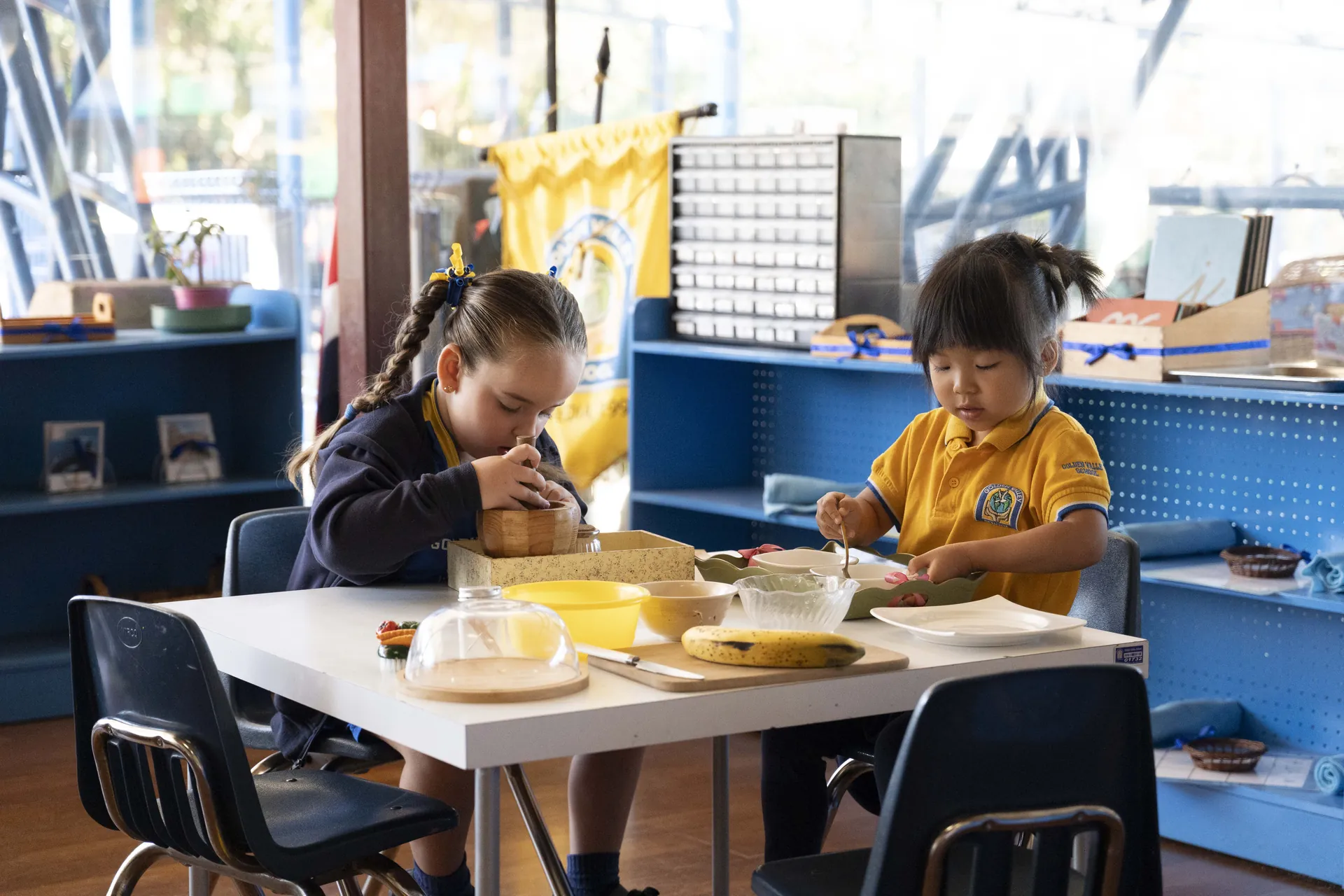
Every element in a Montessori classroom is intentionally designed: child-sized furniture, orderly shelves, beautiful and accessible materials. The environment itself is the teacher — it invites exploration, enables independence, and allows the child to choose meaningful work freely.
The Role of the Guide
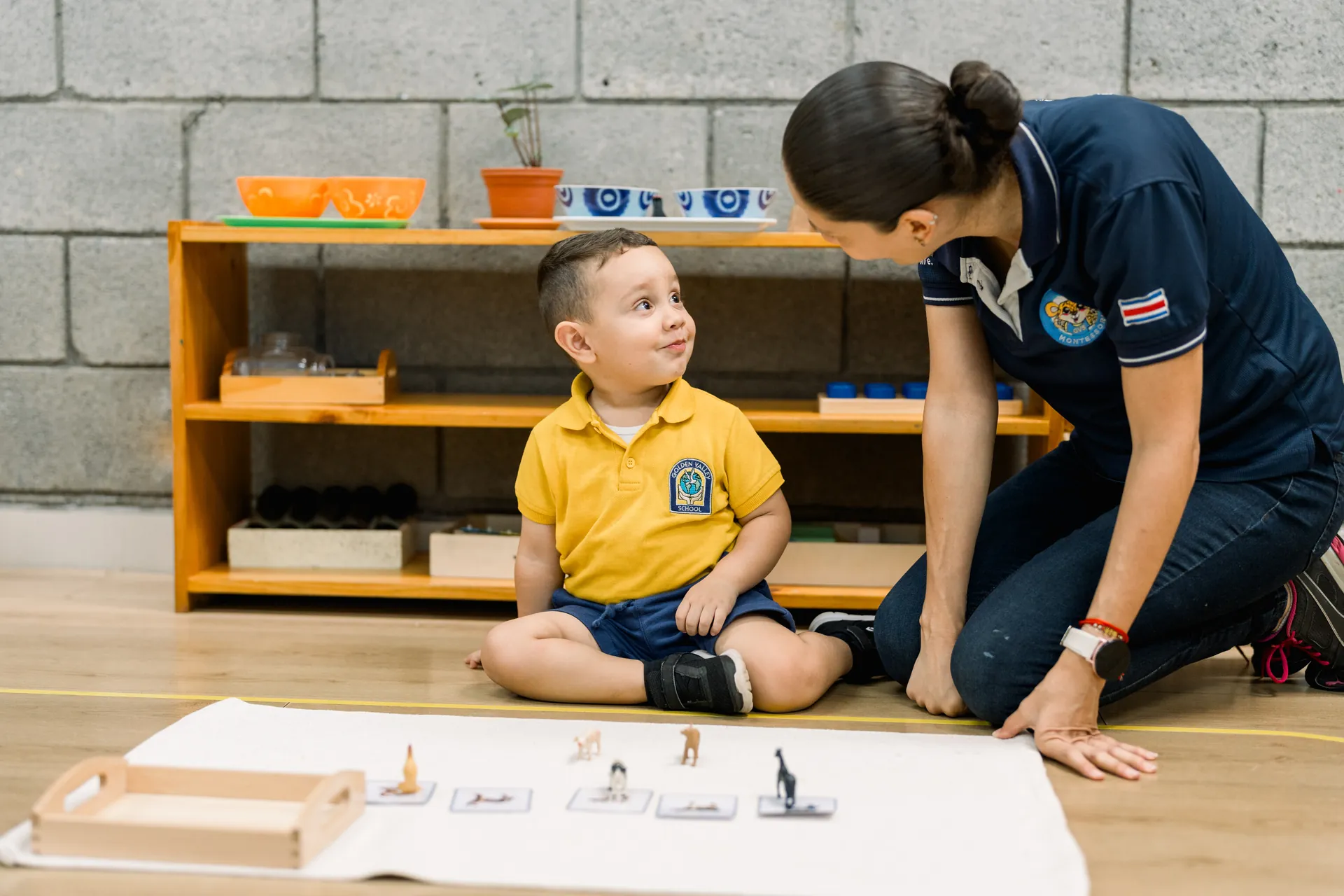
In purist Montessori, the adult is not a traditional teacher but a guide — a careful observer who connects the child with the environment. The guide prepares, observes, and intervenes only when necessary, trusting the child's inner drive toward self-construction and respecting their developmental rhythm.
Freedom within Limits
True freedom is not the absence of structure — it is the ability to choose purposefully within a framework of respect and responsibility. Children freely select their work, move through the environment, and manage their time, while respecting shared guidelines that nurture community and self-discipline.
Auto-education
Maria Montessori discovered that children educate themselves. Through self-correcting materials and free choice of activity, children develop intrinsic motivation, deep concentration, and a love of learning that does not depend on external rewards or adult direction.
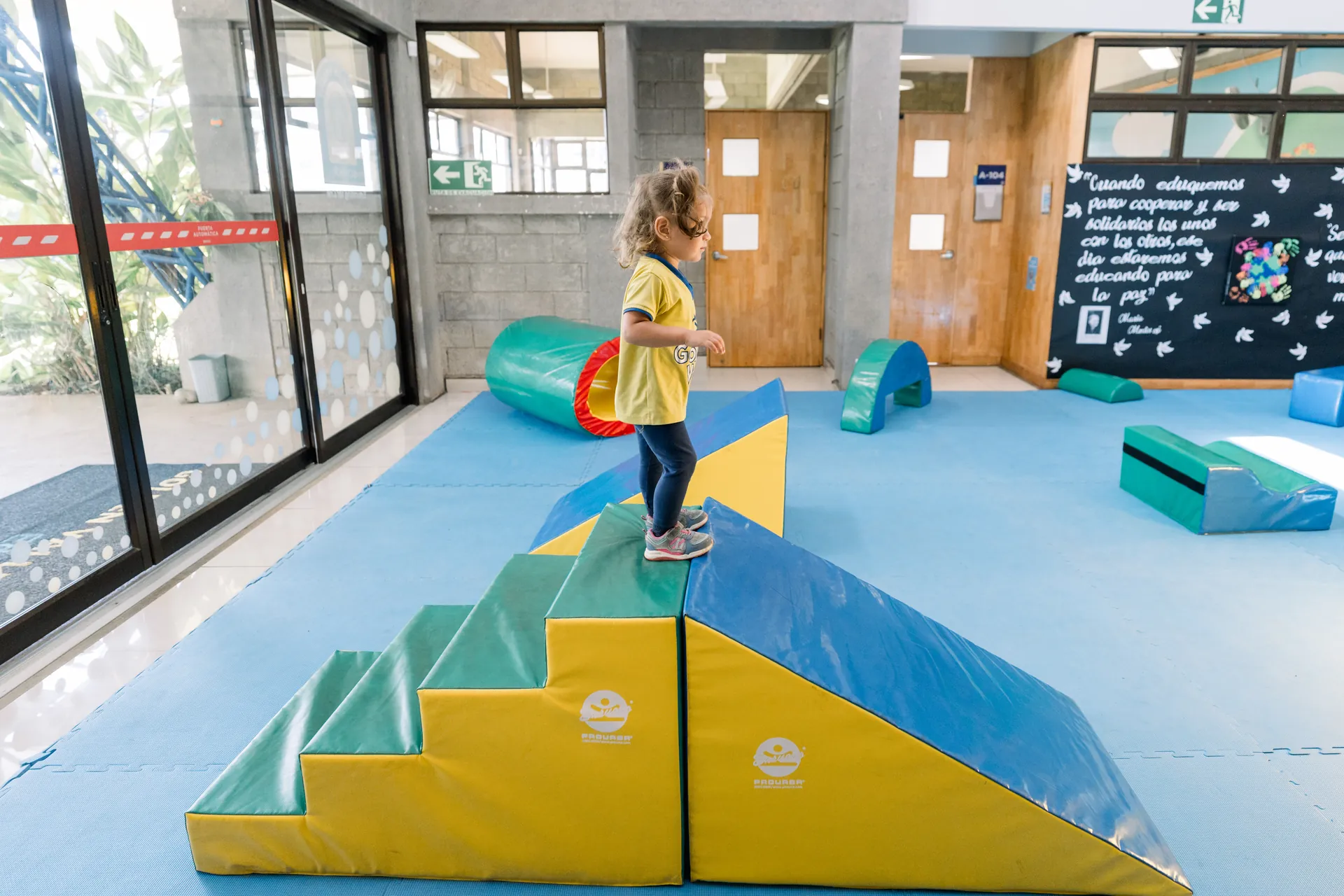
Life in Our Montessori Classrooms
Our Three Programs
Following Maria Montessori's understanding of the first plane of development (4 months to age 5), we offer three distinct environments designed for each stage of the young child's growth.
Nido — Early Stimulation
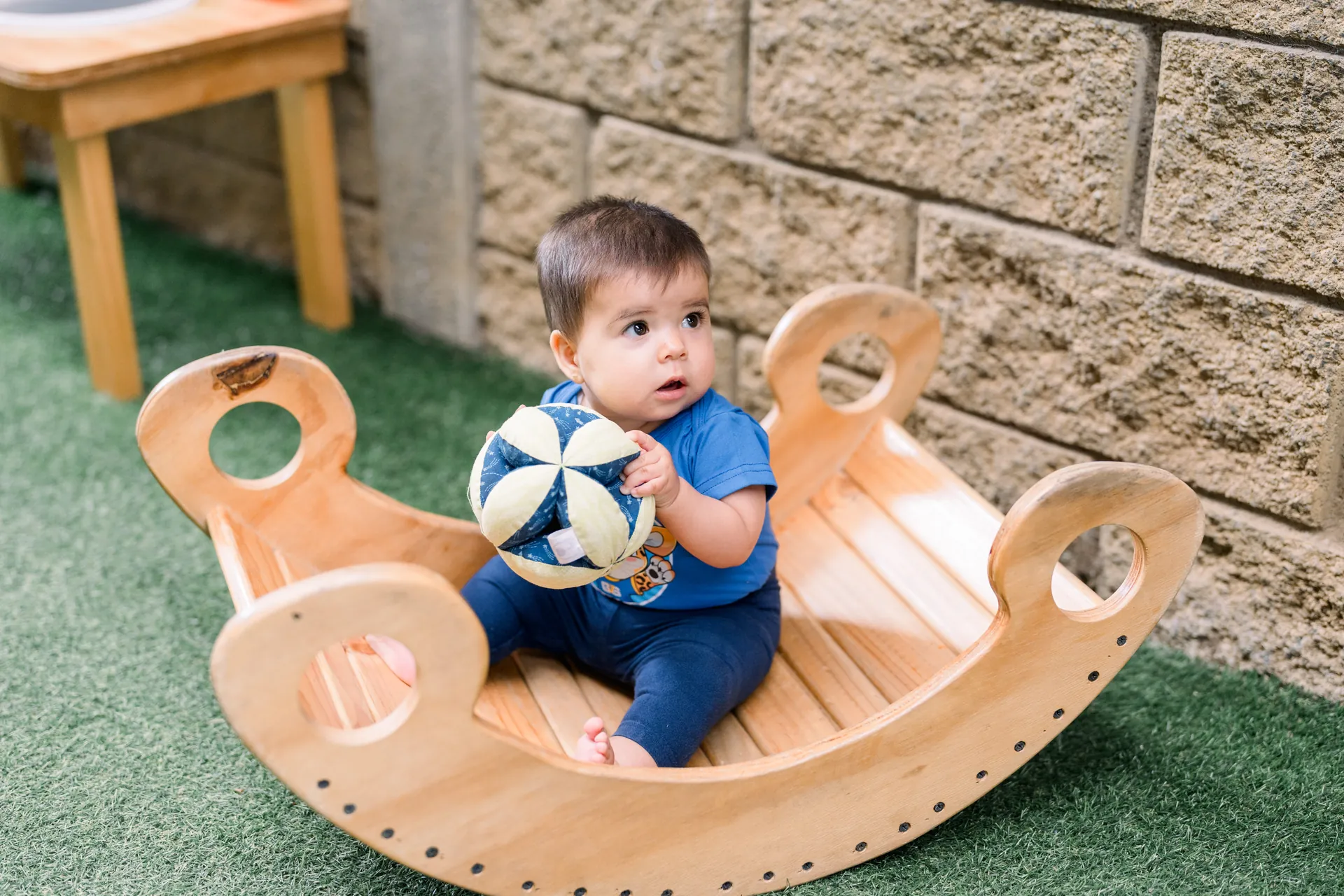
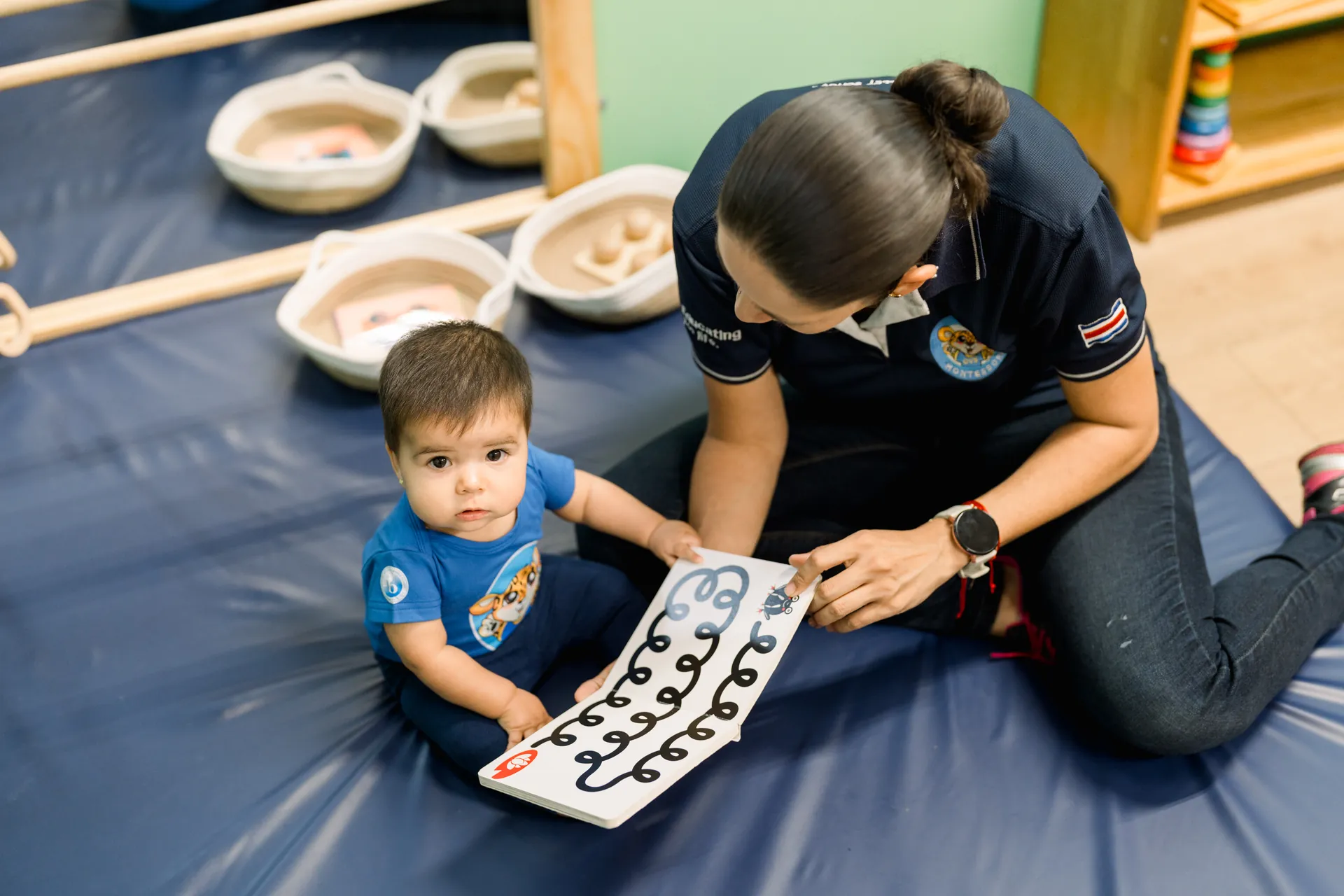
The Nido ('nest' in Italian) is where a child's Montessori journey begins. Maria Montessori recognized that the earliest years are the most formative — the period when the absorbent mind is at its most powerful and the foundations of personality, movement, and language are laid.
At GVS, we welcome children from 4 months into a warm, secure environment specifically designed for this critical stage of development. Here, every detail — from the height of the shelves to the selection of materials — supports the child's emerging independence and sensory exploration.
- Sensory-rich environment that stimulates visual, auditory, tactile, and motor development during the most sensitive period for sensory exploration.
- Purposeful movement activities that support gross and fine motor development — walking, climbing, grasping, and coordinating hand-eye movements.
- Language immersion through songs, stories, naming activities, and rich verbal interaction during the sensitive period for language acquisition.
- First experiences with practical life — eating independently, dressing, and caring for their personal space — building confidence, coordination, and a sense of self.
- A calm, nurturing atmosphere where secure attachment with the guide allows children to feel safe as they take their first steps toward independence.
Community of Toddlers
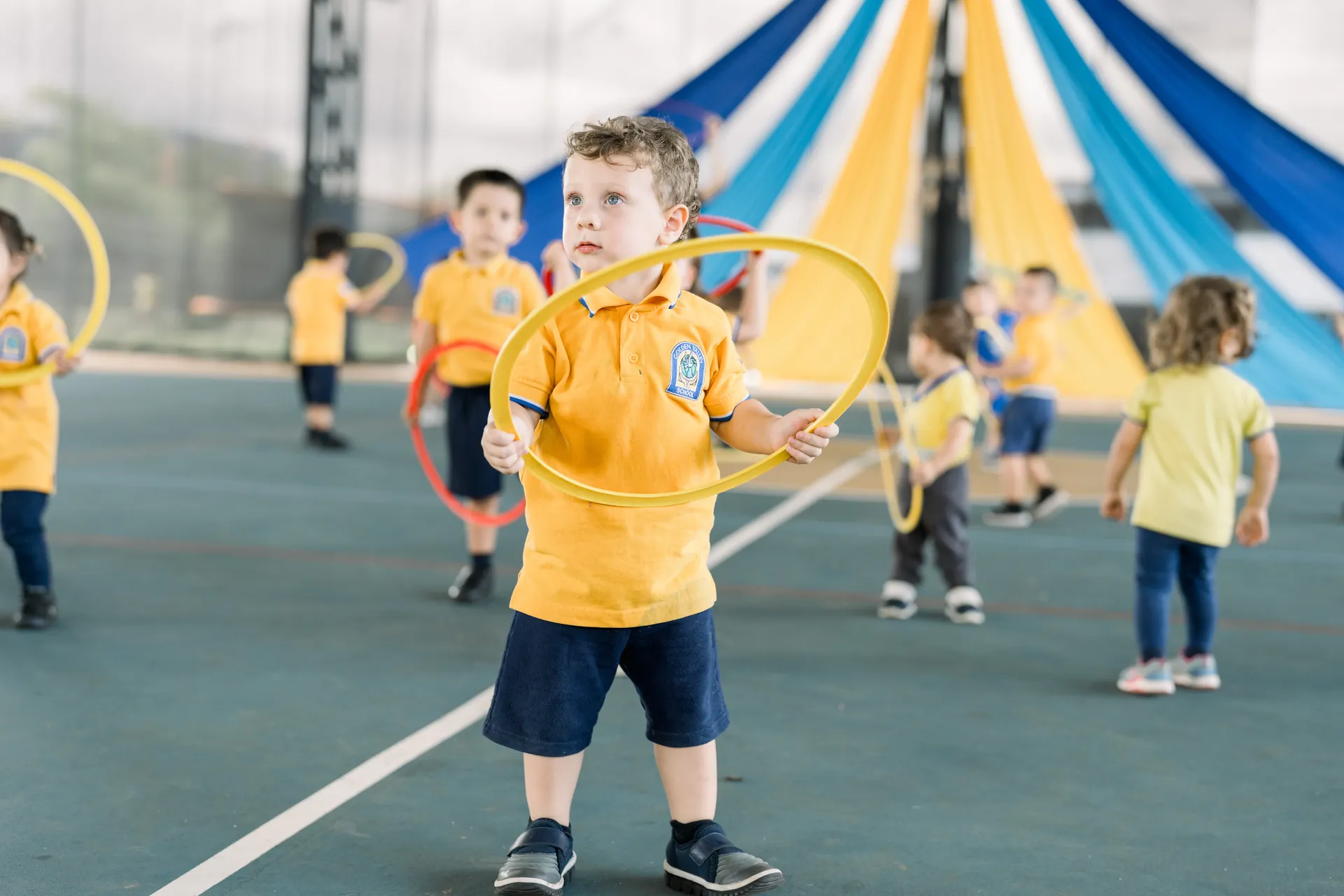
The Comunidad Infantil is where the child's drive toward independence truly blossoms. As Maria Montessori observed, the toddler's fundamental declaration is 'Help me to do it by myself' — and every aspect of this environment is designed to honor that need.
In this multi-age community, children experience the joy of meaningful work, develop social awareness, and undergo the extraordinary explosion of language that characterizes this stage. Practical life activities form the heart of the curriculum.
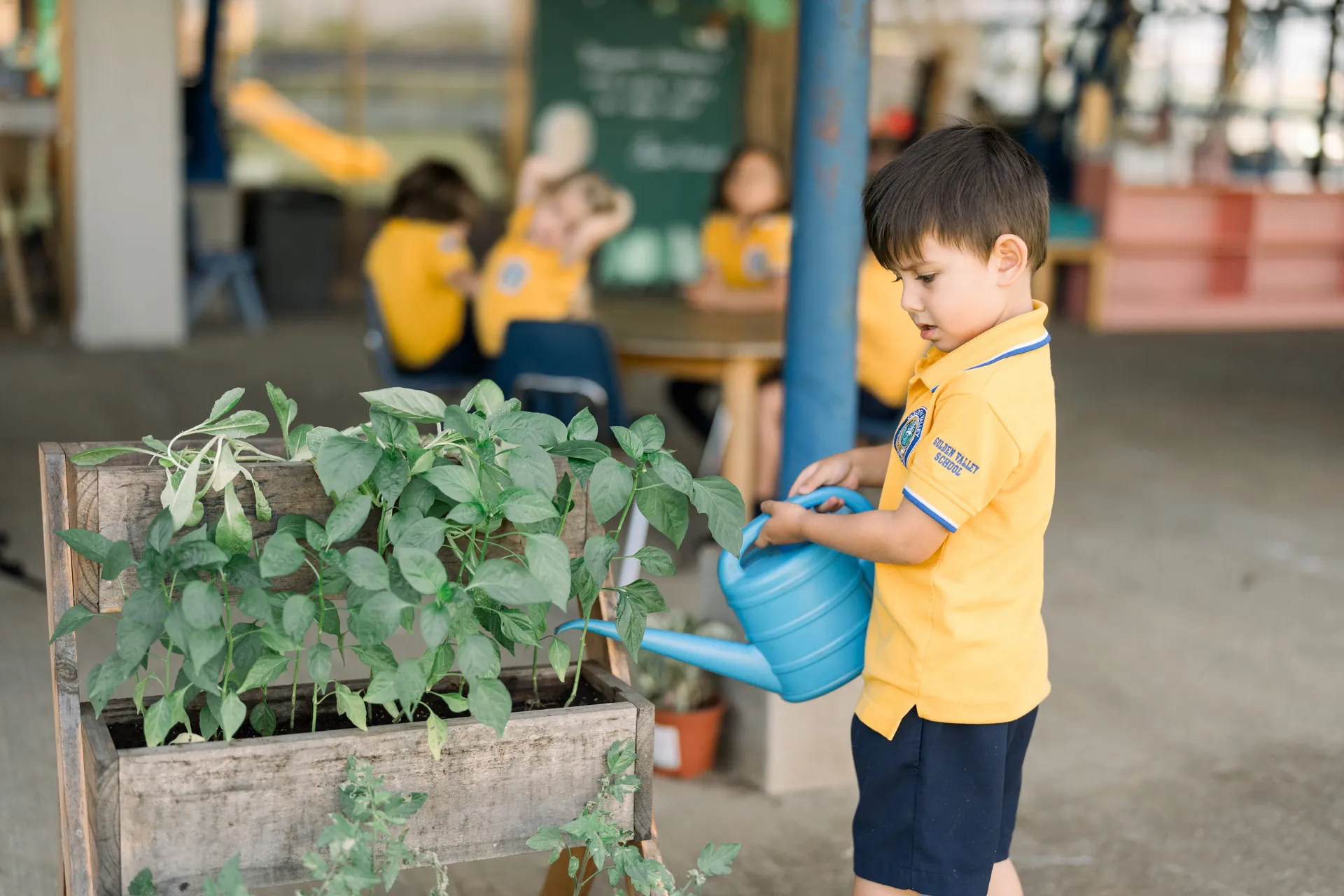
- Practical life activities — pouring, sweeping, food preparation, hand washing, dressing frames — that develop concentration, coordination, order, and independence.
- Rich language environment supporting the language explosion: vocabulary enrichment, storytelling, naming exercises, and early phonemic awareness.
- Grace and courtesy lessons that develop social awareness, empathy, and respectful interaction with peers and adults.
- Sensorial materials that refine the child's perception of the world — discriminating color, shape, size, weight, texture, sound, and smell.
- Art, music, and movement activities that nurture creativity and self-expression while developing fine and gross motor control.
Children's House
The Casa de Niños is the heart of Montessori education — the environment Maria Montessori first created in 1907 in San Lorenzo, Rome, where she discovered the child's extraordinary capacity for concentration, self-discipline, and joyful learning. At GVS, our Children's House remains faithful to that original vision.
In this multi-age classroom (3 to 5 years), children choose their own work from five curriculum areas, developing at their own pace with authentic Montessori materials that make abstract concepts concrete. The three-year cycle allows younger children to learn from older peers, and older children to consolidate knowledge through leadership.
- Practical Life: Activities that develop executive function, concentration, and independence — from food preparation to care of the environment.
- Sensorial: Materials like the Pink Tower, Brown Stair, and Color Tablets that refine perception and build the foundation for mathematical and scientific thinking.
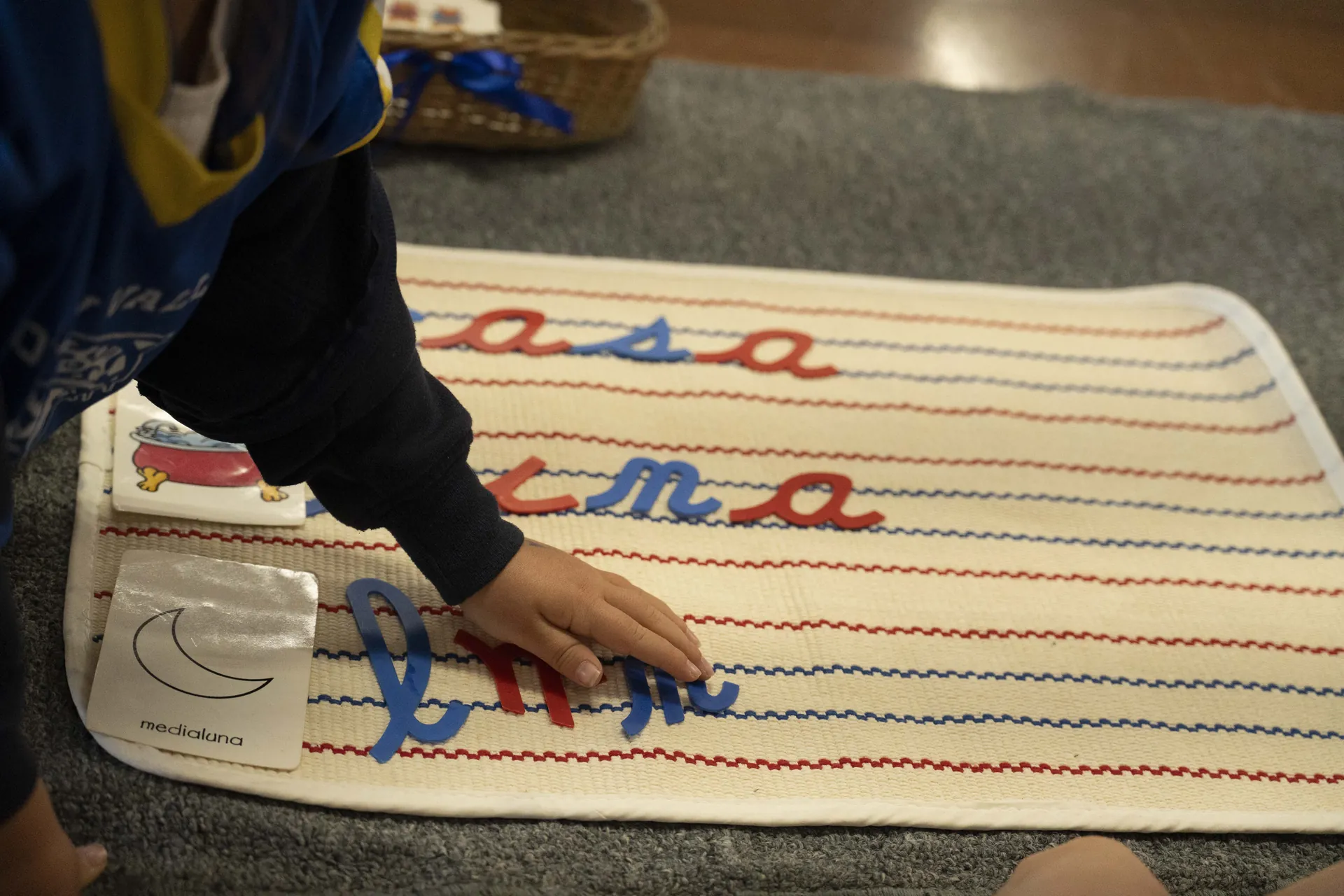
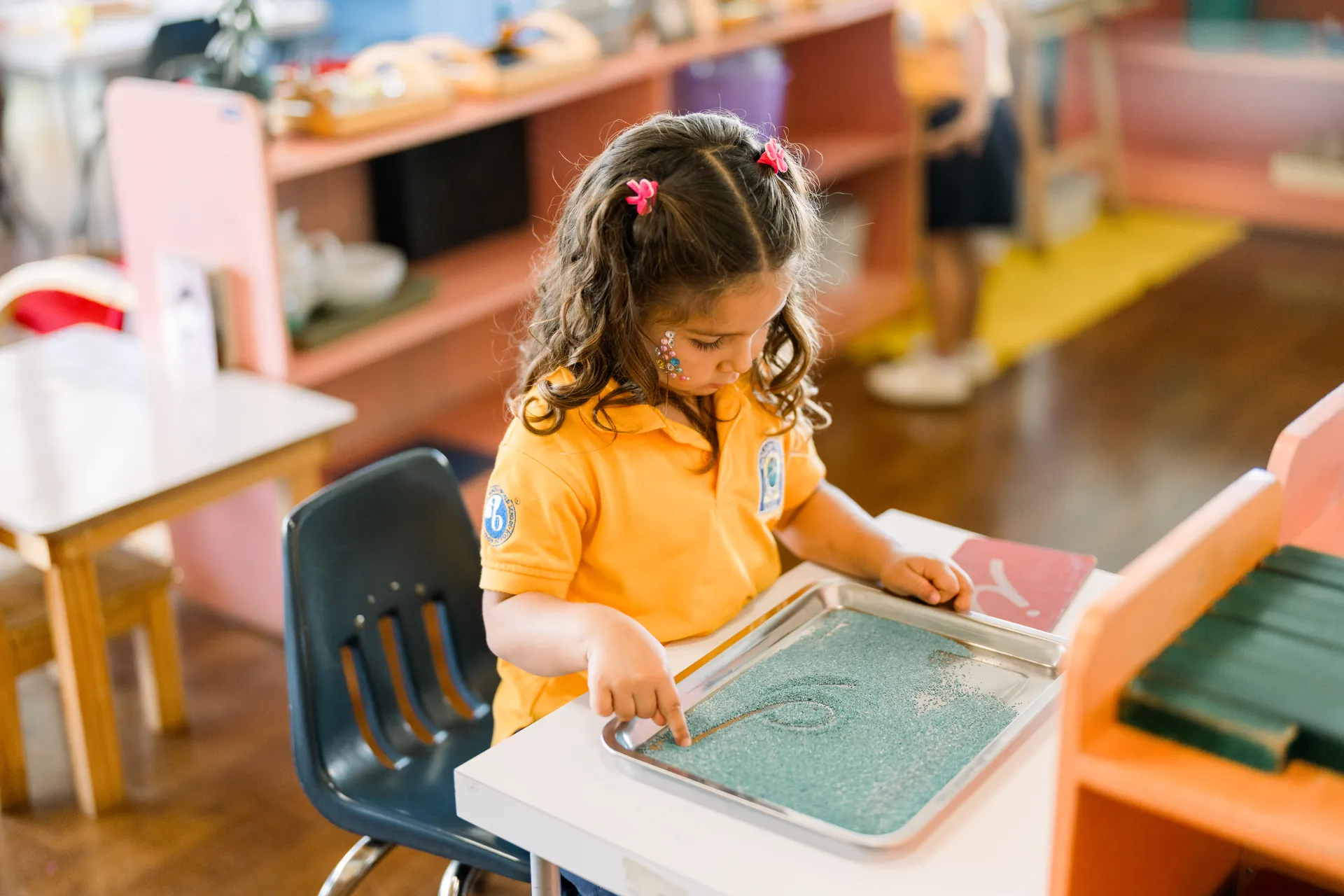
- Language: From the Sandpaper Letters and Moveable Alphabet to early reading and writing — following the child's natural progression toward literacy.
- Mathematics: The Golden Beads, Spindle Boxes, and Number Rods make quantity, place value, and operations tangible — leading to genuine mathematical understanding.
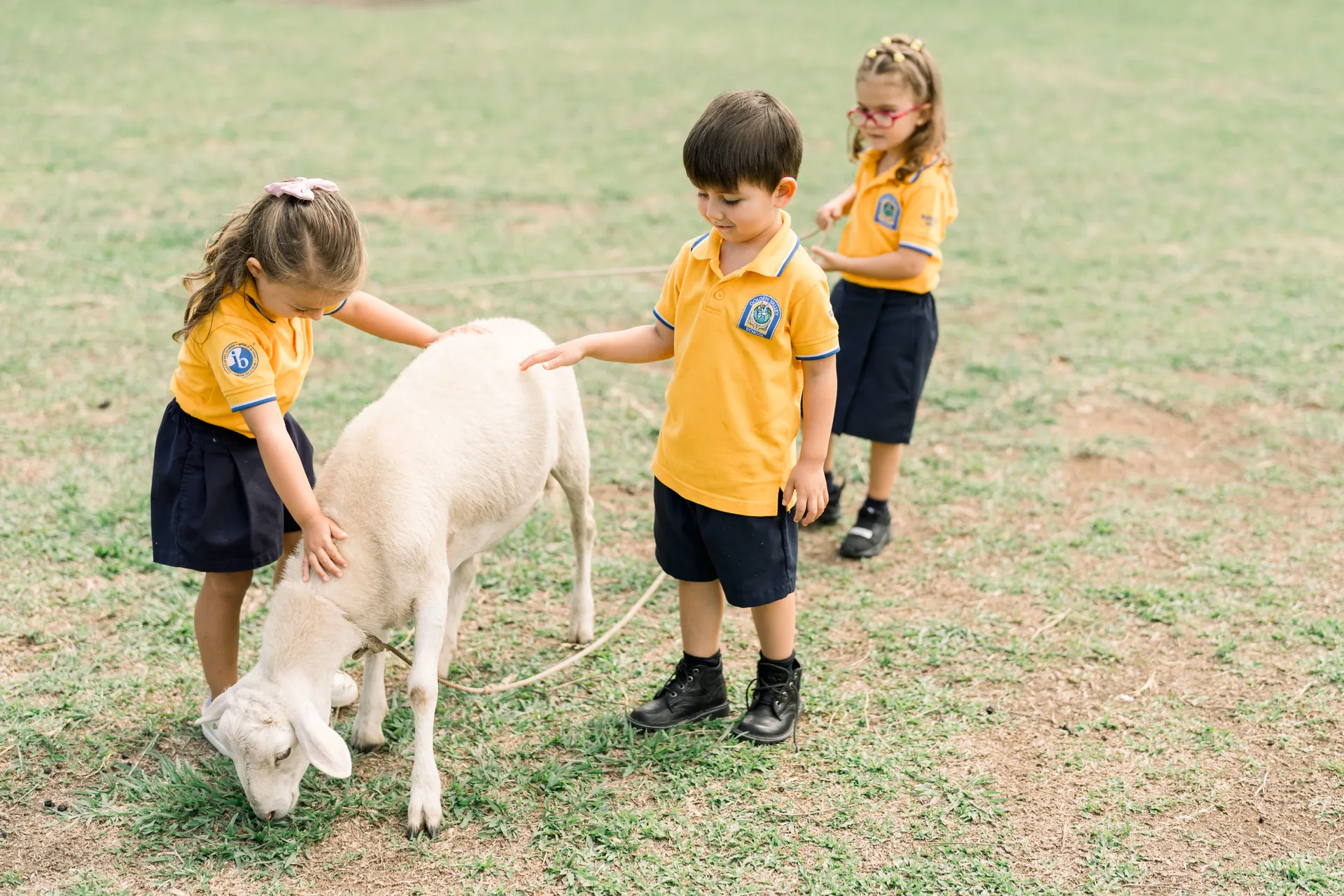
- Culture: Geography, biology, botany, zoology, history, art, and music — nurturing the child's innate curiosity about the world and laying the foundation for cosmic education.
Authentic Materials & the Work Cycle
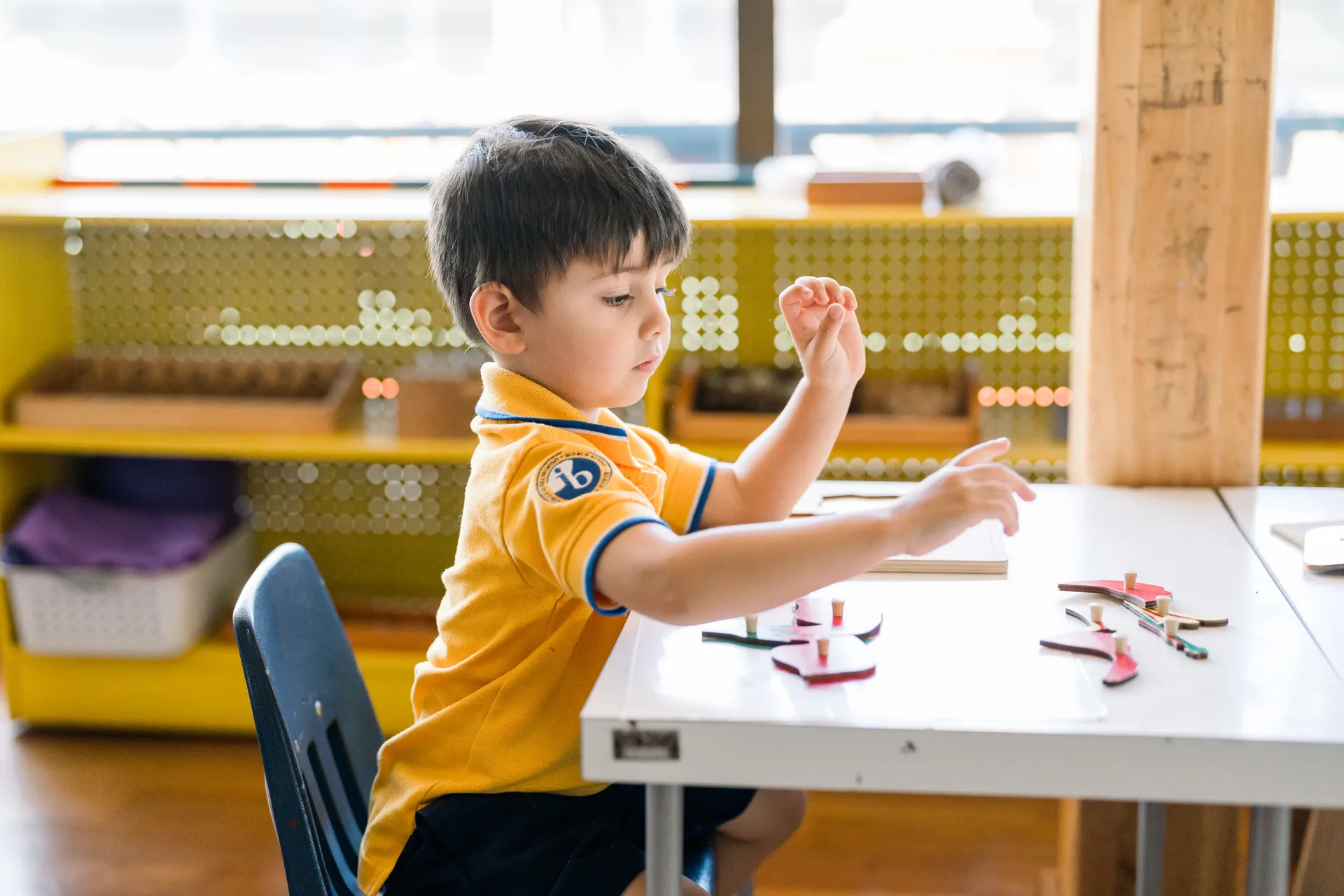
Our classrooms use authentic Montessori materials — the same scientifically designed, self-correcting apparatus that Maria Montessori developed through careful observation. These are not toys; each material isolates a single concept and invites the child to discover, correct, and master it independently.
We protect the uninterrupted work cycle — a continuous block of time (typically 3 hours) where children freely choose, concentrate, and complete their work. Maria Montessori identified this cycle as essential: the child moves from restlessness to deep concentration and emerges with a profound sense of satisfaction and inner peace.
Why Purist Montessori?
- Honors your child's natural developmental timeline — no rushing, no holding back
- Builds intrinsic motivation and a lifelong love of learning
- Develops executive function, self-regulation, and emotional intelligence from the earliest years
- Fosters independence, confidence, and a strong sense of self
- Multi-age communities develop empathy, leadership, and social grace
- Seamless preparation for primary school and lifelong academic success
What Our Parents Say
Elena Barrantes
Parent"Having our child in a Montessori environment has been one of the best decisions we've made as parents. Since he started at age 2, we've seen how it has helped him become independent, confident, and brave. We've also noticed he is very curious and perceptive, always exploring and asking questions, which reflects how the method encourages learning through experience and observation. We love seeing the respect for his own pace and freedom with responsibility help him grow not only in academic skills but also in self-confidence and love for learning, which has also helped us as parents work on boundaries and consequences through respectful parenting. Without a doubt, the Montessori system has been a great ally in his holistic development."
Andrea Puente
Parent"Casa de Niños Montessori has been a space that has allowed our children to develop greater independence, curiosity, and creativity. The guides have always been by their side, cultivating empathy, responsibility, and providing them with much support and affection day by day. As a family, we truly feel happy to see that our children are in an environment of respect, with materials appropriate for their developmental stage, with friends who appreciate and accompany them in this beautiful stage. Living the Montessori experience has been a learning experience even for us as parents—learning to respect their time, give them autonomy, and see how day by day they have so much to teach us."
Heidy Mora
Parent"Our children's experience with Montessori went far beyond simply learning to read or count—it was a foundation for their holistic development as individuals. 'Practical life' activities like washing dishes and cleaning up spills not only taught them skills but also helped them become independent students with higher levels of concentration and self-confidence. This has been fundamental now that they're in primary school. We're convinced this methodology is the ideal way to begin the educational journey."
Welcome to Your Child's First Home Away from Home
Schedule a campus tour and experience our prepared environments firsthand. See how we nurture independence, curiosity, and a love for learning from the very earliest stages — faithful to Maria Montessori's vision.